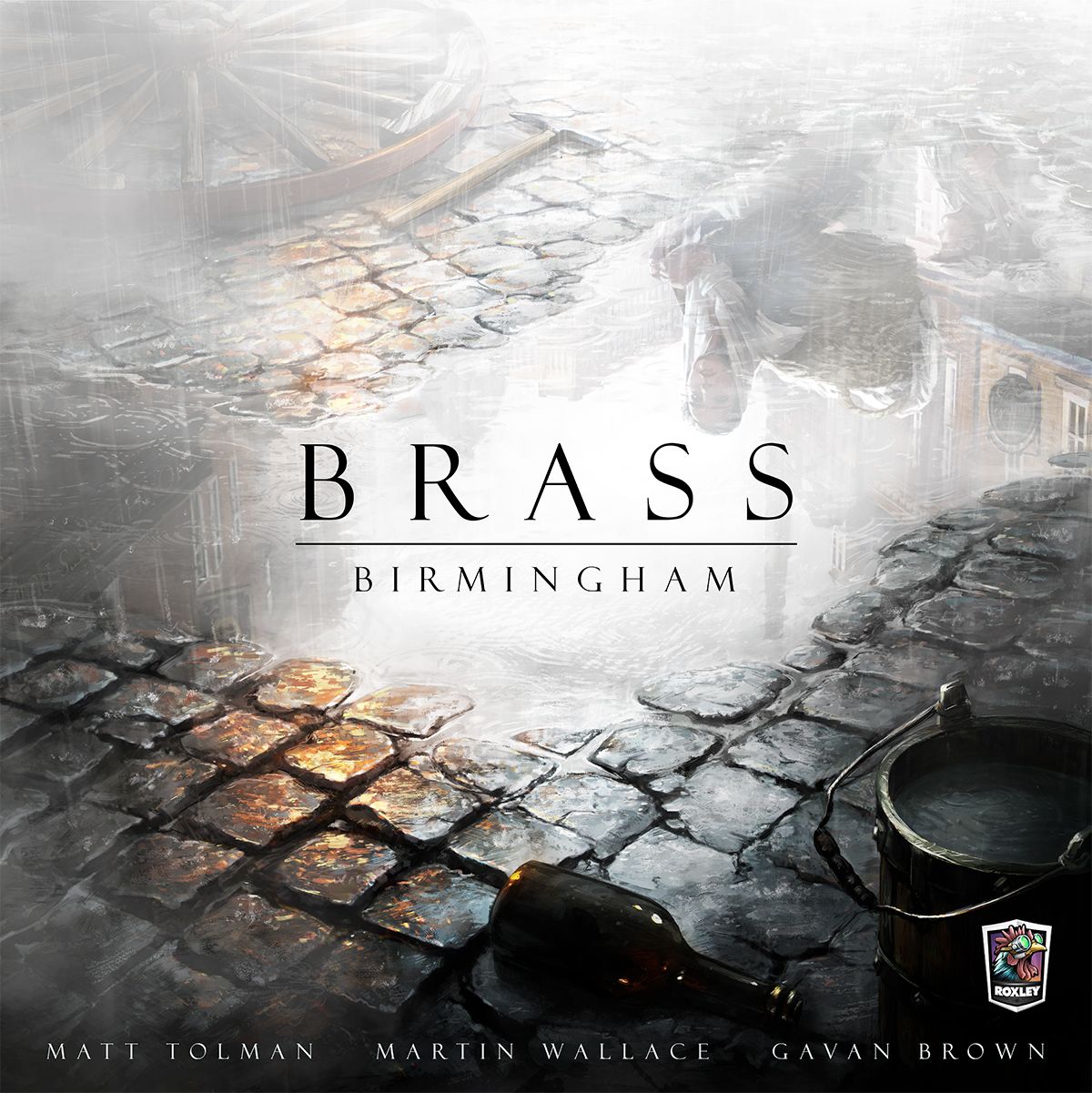
There's a reason Brass: Birmingham sits at number one on BoardGameGeek. Not because it's the most accessible, or the prettiest, or the most talked-about game on social media. It's there because once you understand it — once the gears click — nothing else feels quite as satisfying. This is Martin Wallace's masterwork, refined and polished by Gavan Brown and Matt Tolman into something that borders on perfect.
How It Plays
The game spans two eras of the Industrial Revolution — the Canal Era (1770-1830) and the Rail Era (1830-1870). Each round, you play cards from your hand to take actions: build industries, establish network connections, develop your technology, sell goods to distant markets, or take out loans when cash runs dry. The cards dictate where you can build (by city name or industry type), creating a constant tension between what you want to do and what the cards allow. At the end of each era, you score points for your connected industries and network links. But here's the twist: when the Canal Era ends, all your canals and Level 1 industries get wiped from the board. Only what you've built in the Rail Era — on top of the foundation you laid — survives to the final scoring. This two-act structure is the game's beating heart.
What Makes It Special
The gift economy. When you need coal, you take it from the nearest source — even if it belongs to another player. When they sell iron, it might flip your factory. Players are locked in simultaneous competition and co-dependence, and this creates a texture that pure competitive games lack. You're not just optimizing your own engine; you're reading the board, anticipating what resources others need, and positioning yourself where your opponents' success feeds yours. The result is a game where you can play 60+ times and still discover new strategic angles.
Who It's For
This is not a gateway game. This is the game you graduate to after you've played Catan, Ticket to Ride, and maybe Terraforming Mars. It demands your attention for two hours, punishes lazy play, and rewards deep thinking. If you've ever finished a game and thought 'I wish my decisions mattered more,' Brass: Birmingham is your answer. Best at 3-4 players, where the shared economy really sings and table talk adds a political layer. The 2-player game is still excellent, but it becomes more of a tactical duel than the multiplayer economic dance.
Components & Production
The Deluxe Edition is a work of art. Iron clay poker chips replace cardboard tokens, giving every transaction weight. The double-sided board is gorgeous — a detailed map of Birmingham's canal and rail networks rendered in deep blues and warm browns. The card stock is excellent, and the custom insert holds everything perfectly. Even the standard edition is well-produced, but the Deluxe is one of the best physical board game products on the market.
Replayability
Effectively infinite. The card-driven action selection means no two games follow the same path, and the variable player count dramatically changes the board's economy. With four players, resources are scarce and positioning is critical. At two, it's a chess-like puzzle. Different industry strategies (coal baron, iron magnate, manufacturer, network king) all remain viable, and the meta shifts with your group's playstyle.